


International Kidney Cancer Collaboration with Leadership from Philadelphia

The Fox Chase – Temple Urologic Institute
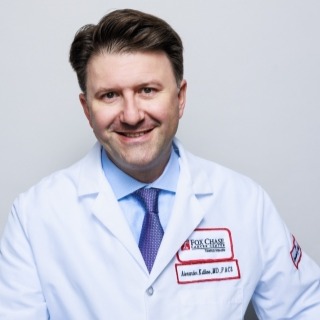
Alexander Kutikov, MD, FACS
Chair, Department of Urology
Fox Chase Cancer Center
“Kidney cancer is a growing global health problem, and both clinicians and policymakers need to prepare for a steep rise in the number of cases,” said Alexander Kutikov, MD, FACS, Chair of the Department of Urology at Fox Chase Cancer Center and senior author of a landmark international study published in European Urology, which demonstrates that if current trends continue, kidney cancer cases could double by 2050.
“This review creates an alarming new reference point for the field, summarizing what we know about kidney cancer incidence, survival, genetics, and risk factors,” added Kutikov, also a member of the executive management team of the Fox Chase – Temple Urologic Institute in Philadelphia, and internationally recognized for his work in kidney-sparing surgery, minimally invasive surgery, standard treatment options, and active surveillance of small kidney tumors.
Avoiding a 2050 Tsunami
The study underscores the urgent need for prevention, early detection, and policy planning. Modifiable risk factors such as obesity, diabetes, hypertension, lack of exercise, and smoking will be significant aspects in the increase of cases, and there is a steep learning curve to educate providers and patients starting now.
Fox Chase – Temple Urologic Institute Is on the Case
The study provides a new foundation for the Institute team to prevent, diagnose, and treat kidney cancer. It aims to expand genetic testing, address modifiable risk factors such as obesity and hypertension, and build new survivorship models that reflect the projected doubling of kidney cancer incidence in 25 years.
The Institute already treats some of the highest volumes of kidney cancer patients not only in the region but also worldwide, maintains one of the largest prospective kidney cancer databases, and has contributed substantially to the kidney cancer literature for decades. For example, the R.E.N.A.L. Nephrometry Score was developed at Fox Chase and remains one of the most widely cited and impactful tools in the field, providing an objective framework for assessing tumor complexity.
Kutikov noted that Fox Chase’s participation in this study reflects the long-standing leadership and collaboration of Fox Chase and Temple Health in urologic oncology. “Seeing Fox Chase and Temple trainees among the co-authors of this international study is gratifying and highlights our enduring impact on the field of kidney cancer research and care,” he said. “It is a privilege for our team to contribute to a paper in one of the top journals in urology.”
The study, “Epidemiology of Renal Cancer: Incidence, Mortality, Survival, Genetic Predisposition, and Risk Factors,” was published in European Urology.